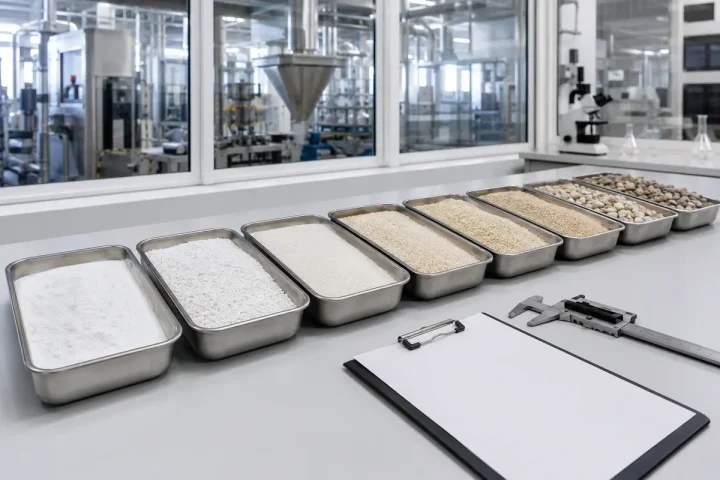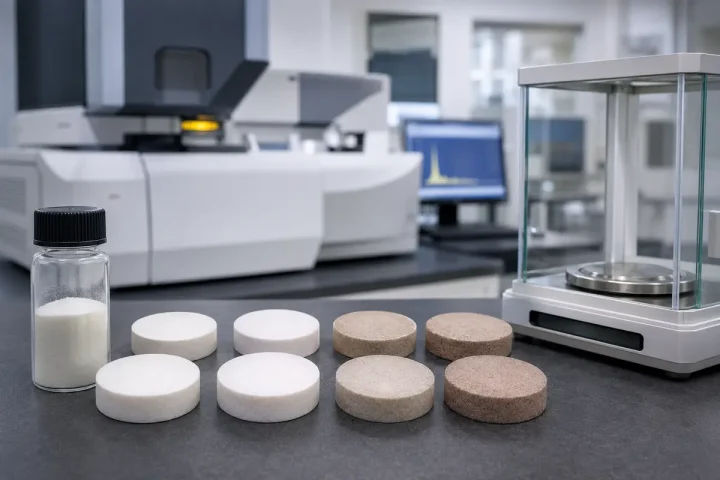
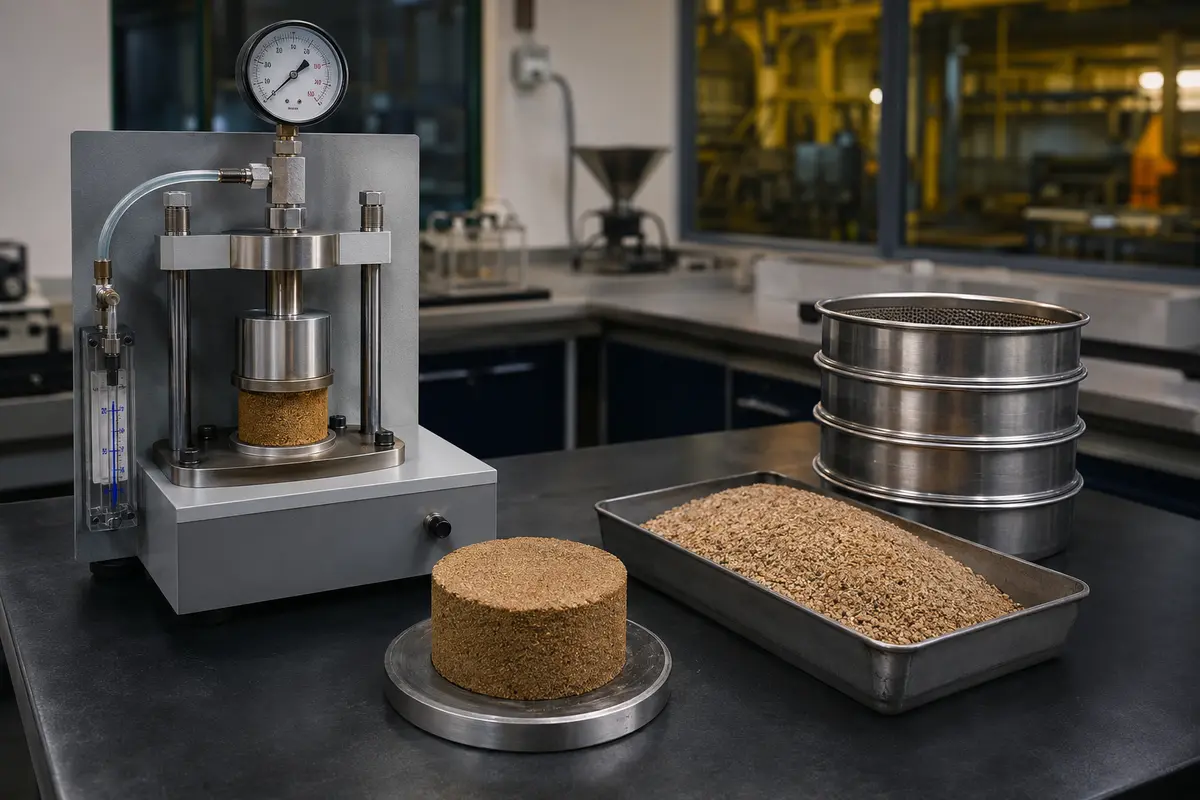
Silica sand is used as a base material in many moulding and core-making processes. Its behaviour depends on more than SiO₂ content: grain size and shape, fines, moisture and compatibility with the binder system also matter. Consistent incoming inspection helps identify raw-material changes before they affect production.
How does grading affect the mould?
Particle distribution influences void space and gas passage. Excessive fines can increase surface area and binder demand, while a distribution concentrated at the coarse end may influence casting surface quality. The target is a distribution suited to alloy, casting geometry, binder system and compaction method.
Why is grain shape important?
Rounded, sub-angular and angular grains behave differently during packing and binder coating. Shape can influence void space, mould strength and binder consumption. Microscopic or visual shape assessment therefore adds useful context to the sieve result.
Common base-sand quality checks
- Sieve analysis and the grading index used by the foundry;
- moisture and ultrafine fraction;
- visual inspection for colour, contamination and foreign material;
- chemical analysis for process-sensitive constituents;
- grain-shape and uniformity assessment;
- performance tests using the actual sand and binder mixture.
Standardise incoming sampling
A sample collected only from the surface of one bag may fail to represent fine or coarse portions of the shipment. Keep sampling locations, composite-sample mass and sample-division practice consistent. Test results must remain traceable to the relevant batch and delivery.
Not every casting defect originates in the base sand
Metal penetration, rough surfaces, gas defects and mould failure can have several causes. Gating, pouring temperature, compaction, moisture, binder type, mixing time and mould venting may all contribute. During troubleshooting, base-sand changes should be reviewed alongside process data to avoid assigning the wrong cause.
Batch acceptance checklist
- Batch identification, weight and packaging are intact.
- The sieve curve meets the agreed range.
- Moisture and fines have been checked.
- Appearance and foreign contamination have been reviewed.
- The COA matches the purchase specification.
- A line trial is completed after a significant source or grade change.
Conclusion
Stable foundry-sand quality comes from controlling both raw material and process. The foundry silica sand page gives typical supply information, while final acceptance limits should be documented for your moulding system and verified for each shipment.