Silica media is one component of an engineered filtration system. Vessel design, flow, bed depth, feed-water quality, supporting layers and the backwash programme all influence performance. Product selection should therefore be coordinated with the filter designer or equipment manufacturer.
What does a silica filter bed do?
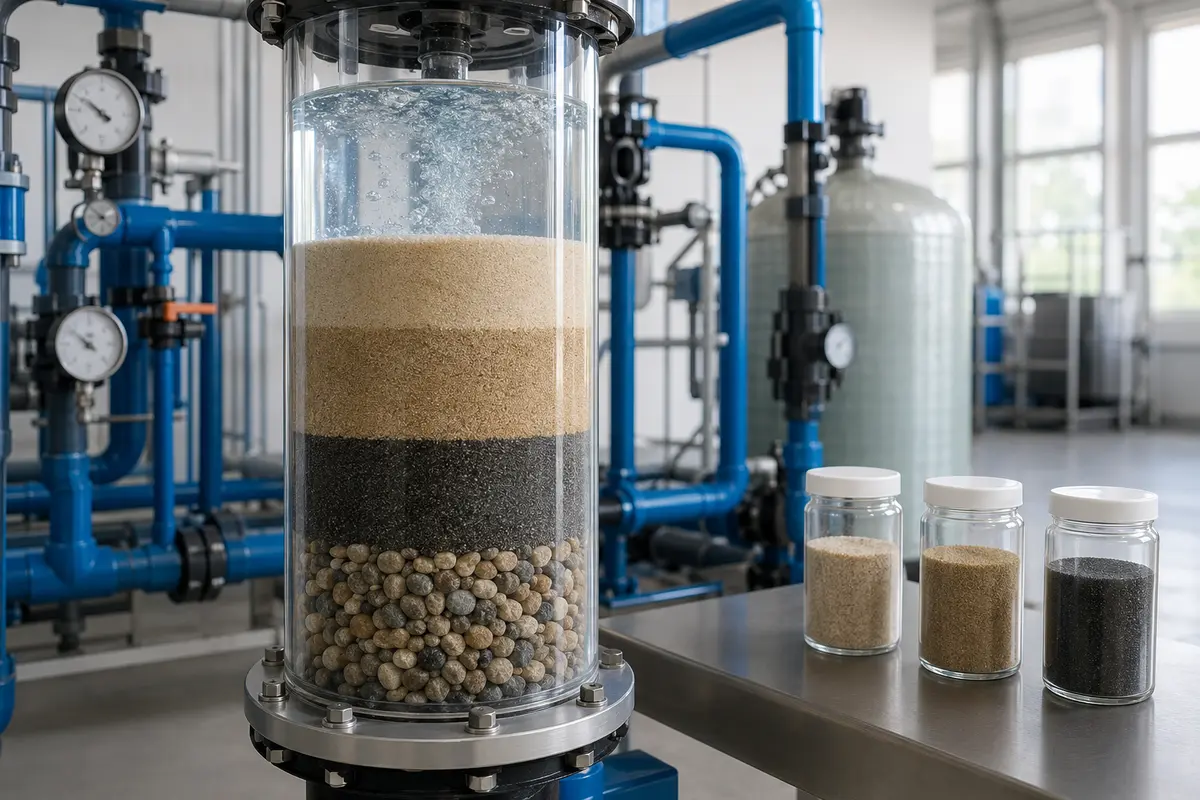
A granular bed creates complex flow paths that retain part of the suspended load within its depth. Particle size and void space affect pressure drop, solids-holding behaviour and backwash response. Finer is not automatically better: an excessively fine medium may increase head loss or become difficult to clean.
Important selection parameters
- Particle-size distribution: must fit the filter and supporting-layer design.
- Uniformity: a very broad spread can produce unpredictable bed behaviour.
- Cleanliness: clay, soil and excessive fines may cause initial turbidity or pressure loss.
- Purity and stability: must suit the intended water contact and project requirements.
- Particle shape: influences packing, void space and mechanical behaviour.
Do not guess the bed layering
Some filters use a single silica layer; others use multiple media or supporting gravel. The sequence, depth and grading of each layer should come from the system design. Substituting one size for another without review can contribute to media migration, nozzle disturbance or poor backwashing.
Quality control before loading
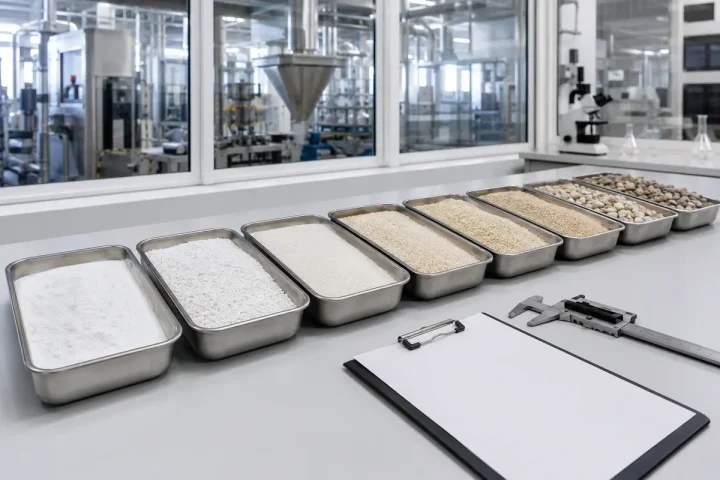
- Collect a representative shipment sample.
- Compare the complete sieve report with the agreed range.
- Check for fines, clay and foreign material.
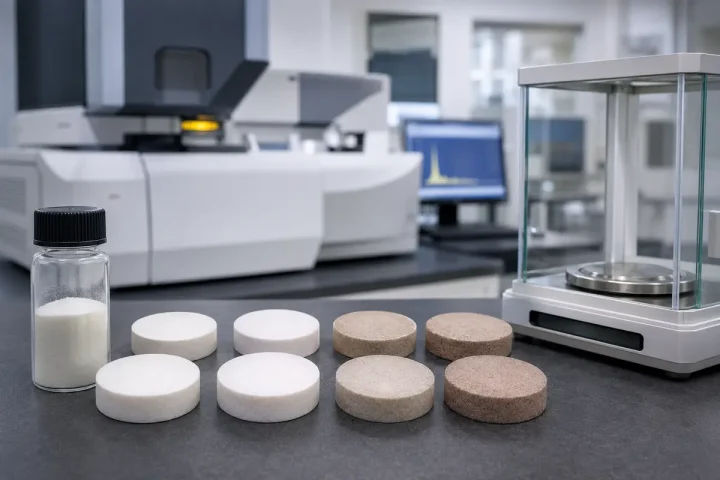
- Verify moisture and package net weight.
- Record batch identification and the associated COA.
Initial commissioning and backwash
After loading, prepare and rinse the bed according to the equipment instructions. Backwash flow depends on media density and size, water temperature and filter geometry. The objective is even bed expansion and removal of fines without losing the main medium. One universal flow value cannot be recommended for every system.
When should the bed be investigated?
Unusual pressure rise, shorter filter runs, visible bed channelling, media loss or declining outlet quality can indicate a need for inspection. Before full replacement, also review nozzles, flow distribution, backwash practice and possible bed contamination.
Conclusion
The right filter silica has grading, cleanliness and consistency that match the real system design. Review the general water-filtration silica specification, then confirm the final requirement against the filter drawing and the batch COA.